November 27, 2025
Do you ever wonder why two lake homes can look similar, yet one commands a higher price? On Lake Lanier, the dock often explains the difference. If you plan to sell or you are comparing properties as a buyer, understanding dock types and features is one of the fastest ways to protect your value. In this guide, you will learn which dock configurations matter most, what local lake factors change the math, and how to evaluate permits and maintenance so you can make a confident decision. Let’s dive in.
A single-slip dock provides one berth for one boat. It is typically lower cost and easier to maintain. If you keep a single boat or use smaller watercraft, it offers solid utility without overcomplicating upkeep.
The tradeoff is capacity. If you or your guests have multiple boats, one slip limits flexibility. A private single slip still adds value, but the lack of covered space or a lift may temper appeal for buyers who prioritize boat protection.
Double-slip docks offer two berths, either side by side or in tandem. You gain obvious utility for multi-boat households and for hosting guests. Many buyers read a double slip as a higher-end feature, which can help in competitive segments.
Expect higher upfront cost and a larger footprint. That can increase maintenance and may invite closer permitting review. When you need storage for more than one boat, the marketability boost is real.
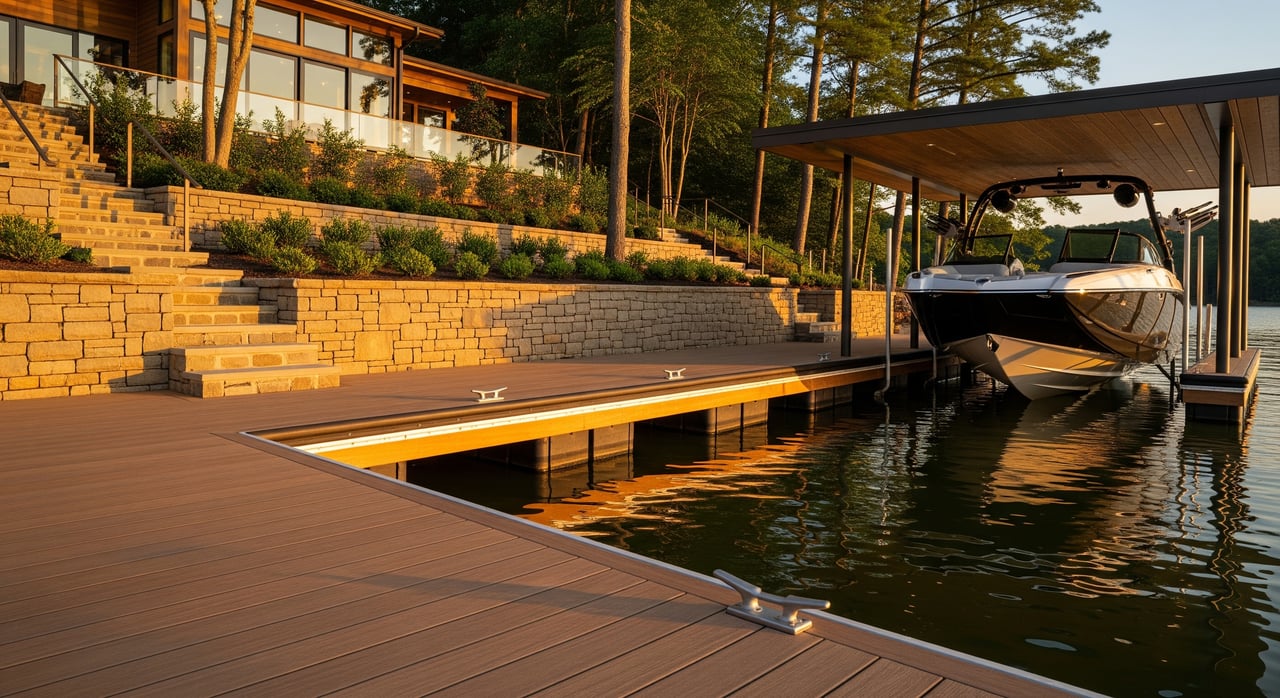
A covered dock protects your boat and upholstery from sun and weather. On a sunny lake, this is more than cosmetic. Protection can extend the life of your boat and reduce upkeep.
Roofs require stronger structure and may face tighter rules in some neighborhoods. Even with added cost, a covered slip is typically a strong positive on Lake Lanier and can be a key differentiator in listings.
A lift raises your boat out of the water when not in use. This reduces fouling and damage, simplifies maintenance, and can extend your boating season.
Lifts add equipment cost and may require electrical or hydraulic support. A dock that is lift-ready, or has an installed lift with documentation, is often highlighted as a premium feature because it lowers a buyer’s startup costs.
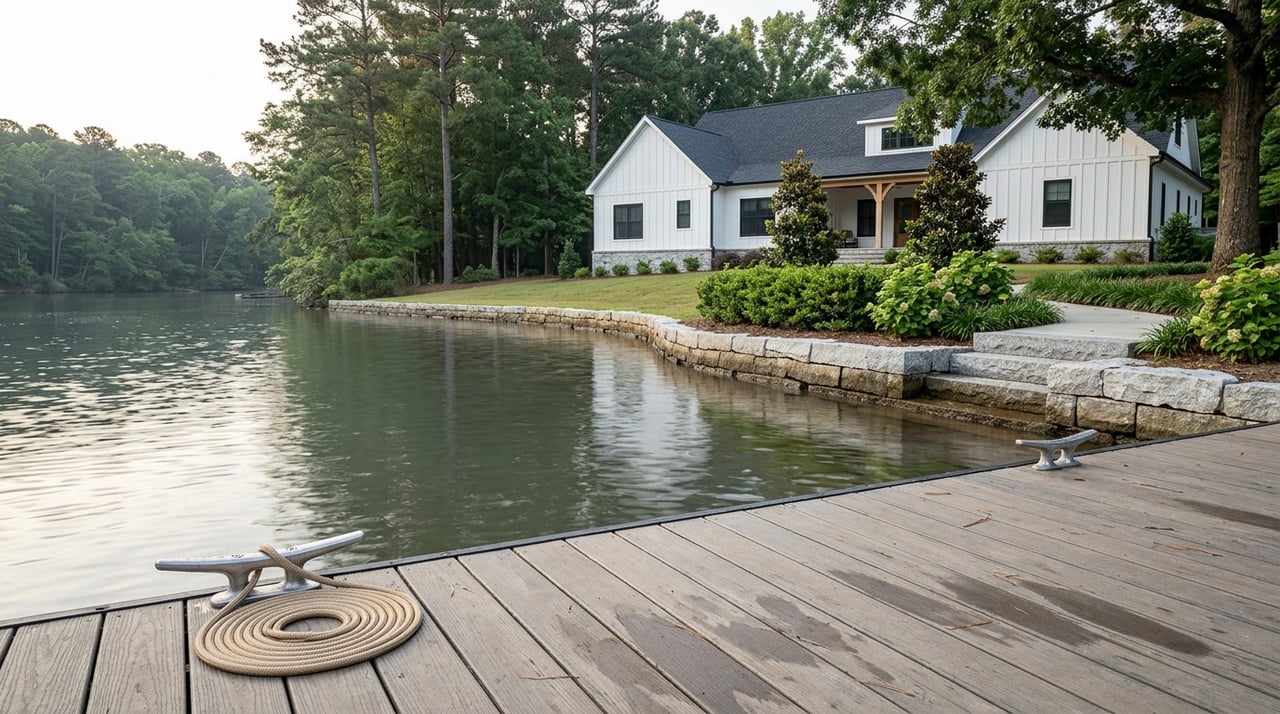
Floating docks rise and fall with the lake. That flexibility is valuable when water levels change. They are often easier to expand with modular sections, though they can move in wind and require anchor systems.
Fixed docks feel solid underfoot. The limitation is water-level swings. If lake levels drop, a fixed dock can become hard to use at low pool. On a variable-level lake, buyers often prefer floating options for consistent access.
T-configurations, L-docks, finger piers, jet ski ports, and dedicated swim platforms add convenience. When well integrated and properly permitted, these features improve day-to-day use and can lift perceived value.
Lake Lanier is managed for flood control, water supply, and recreation, and water levels change throughout the year. The depth at your shoreline can look different in high season versus low season.
This affects dock design and function. A floating dock or longer gangway can maintain usability across a wider range of elevations. When you evaluate a property, consider how the dock performs at normal low pool, not just on a perfect summer weekend.
If the water is shallow near your shore, your boat’s draft matters. Larger or wider boats need deeper water and wider slips. Limits on width or placement can reduce your pool of buyers if your dock cannot accommodate common boat sizes.
When you shop, confirm depth at the berth location and ask how the cove behaves at seasonal low levels. Depth and approach are among the most practical value drivers.
Multiple layers of regulation can apply on Lake Lanier. The U.S. Army Corps of Engineers oversees the project, and state rules, county permitting, and HOA covenants may also affect what you can build or modify.
As a seller, verify that your dock is permitted and that prior improvements have as-built approvals. As a buyer, request documentation of permits and any recent inspections during due diligence. Clear paperwork supports value and smooths closing.
Erosion control, vegetated buffers, and habitat protection can shape dock siting and footprint. Some areas limit riprap or shoreline hardening. Policies vary by county and agency, so check requirements that apply to your parcel or prospective home.
Why this matters: visible deferred maintenance erodes buyer confidence. Small issues on the dock often lead to repair requests or price concessions.
Dock and lift costs vary with size, materials, site access, and contractor pricing. Covered slips and lifts are meaningful investments, but many buyers view them as value-adding features when professionally installed, permitted, and well maintained. For exact numbers, you should obtain bids from local contractors as part of your planning.
When a dock meets your lifestyle, you feel it. If you love boating, entertaining, and hosting, a double-slip dock with a cover and a lift can command a premium. If a dock is unsafe, unpermitted, or unusable at common lake levels, it hurts marketability and can invite repair or removal requirements.
A clean, modern dock with safe access, clear swim areas, good lighting, and comfortable seating elevates your day-to-day experience. Orientation matters too. Better views and protection from heavy wake action can reduce wear and improve enjoyment.
Appraisers consider docks as improvements. Permits, receipts for upgrades, and recent inspection reports help support a higher valuation. Organized records also give buyers confidence that the dock has been cared for properly.
Unpermitted structures, structural damage, failing floats, and worn lifts are red flags. The same goes for shallow or rocky approaches that limit use during parts of the season. Expect buyers to leverage these items in negotiations.
The right dock can elevate your lifestyle and your resale value. By focusing on usability across water levels, proper permits, solid materials, and thoughtful features, you position your lake home to stand out. If you are buying, use the checklists above to compare options with confidence and plan upgrades that fit your needs.
When you are ready to talk strategy for your sale or to analyze a dock on a home you are considering, connect with a local expert who lives the lake lifestyle. Reach out to Dani Burns for tailored guidance on Lake Lanier docks, value, and next steps.
We believe exceptional homes deserve exceptional representation. From exclusive properties to seamless negotiations, we represent every client with the care, precision, and elevated service luxury real estate demands.