
September 17, 2026
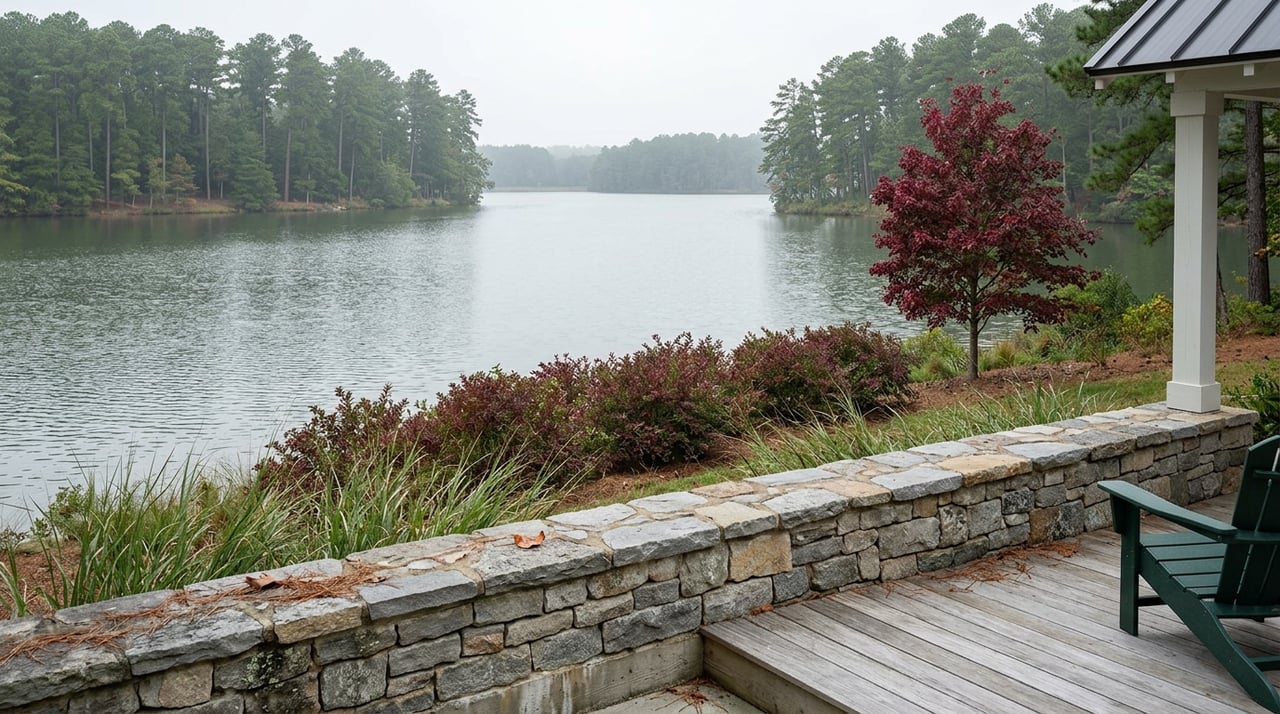
A lake goer paddling near Bald Ridge Creek this week noticed something off in the water across from the Girl Scout camp. It didn't look like the lake usually looks in September. By September 8, the Lake Lanier Association had logged it as a suspected algal bloom and put out the word: steer clear until it's confirmed safe.
If you've lived on or around Lake Lanier for any length of time, this isn't your first bloom notice. It's the second one this year. And if you're the kind of person who checks a water quality app before loading the cooler into the boat, you already know the real question isn't whether the lake is clean. It's whether the information you're looking at is still true by the time you get there.
The Lake Lanier Association's report placed the suspected bloom in a specific spot: the water next to Bald Ridge Creek, across from the Girl Scout camp. That detail matters, because harmful algal blooms on Lanier tend to behave like this. They show up in a pocket of water, not across the whole 38,000-acre lake, and they can appear within days.
The LLA's standing guidance for anyone near the water hasn't changed: avoid swimming if you notice discolored water, an unusual smell, or green or blue scum on the surface. Once a bloom forms, there's little anyone can do except wait for it to clear naturally, which is exactly why documenting where and when it happens matters more than trying to treat it.
This is also not a one-off. Three months earlier, in June, a similar bloom turned up in a small cove within the Six Mile Embayment near Cumming. Chattahoochee Riverkeeper confirmed that one was isolated to a single cove, not a lake-wide event, and the pattern held again in September. Two blooms, two different pockets of the lake, both contained rather than spreading.
Most people who've heard of lake water testing on Lanier know it through Chattahoochee Riverkeeper's Swim Guide, the red-and-green map that tells you whether a given beach passed its most recent bacteria test. What fewer people notice is how that system is actually built, and it's worth understanding before you trust the map blindly.
CRK's staff and volunteers collect water samples every Thursday during the summer recreation season and test them for E. coli, the bacteria the EPA uses as the standard indicator of fecal contamination in surface water. Results post the following Friday afternoon on the Swim Guide map and CRK's own dashboard.
Here's the part that changes how you should read that green checkmark: not every beach on the lake gets tested on the same schedule. Don Carter State Park, Lake Lanier at Olympic Park, Mary Alice Park, and Buford Dam are all sampled weekly from late May through the start of October. River Forks Park, by contrast, is only sampled monthly over that same stretch. A green light at River Forks could be describing water conditions from three weeks ago.
CRK is upfront about this limitation, which is part of why the program is trustworthy rather than a marketing exercise. Their own guidance says conditions can change quickly, and if it's rained in the last 48 hours, if the water is high and muddy, or if you see a bright green tint, you should use caution regardless of what the map says.
Think about what that means in practice. A beach can test clean on Thursday, post green on Friday, and still see a storm roll through Friday night that washes fresh bacteria off nearby lawns and septic systems into that same cove by Saturday morning. The test isn't wrong. It's just already out of date by the time you're standing on the shore.
This is the habit that separates a longtime Lanier resident from someone visiting for a weekend. The app tells you what the water looked like on the sampling day. Your own eyes tell you what it looks like right now.
None of this requires much effort once it's a habit. Before you head to a specific beach or cove:
Reporting matters more than most people realize. Once a bloom is confirmed, CRK and the Lake Lanier Association can track where it's occurring and warn others nearby. You can report a suspected bloom directly to CRK or to the Georgia Environmental Protection Division, and the Lake Lanier Association also takes reports through its own site. That documentation is often the only tool anyone has, since a bloom typically has to run its course rather than being treated.
It's worth understanding why late summer and early fall are exactly when these reports tend to cluster, because it isn't bad luck. The Lake Lanier Association has previously traced fall blooms to a familiar combination: a warm stretch lingering later than usual, a run of dry weather, the lake naturally turning over as surface and deep water temperatures shift with the season, and the steady trickle of fertilizer runoff from lawns around the shoreline. Put those four things together and a cove that looked fine in July can develop a bloom in September with almost no warning.
That's a useful thing to carry into the rest of boating season. The lake doesn't get riskier as a whole this time of year. Specific coves do, for specific and explainable reasons, and the same routine that catches a June bloom in the Six Mile Embayment works just as well for a September one at Bald Ridge Creek.
If you're on the lake often enough, you already know this rhythm without thinking about it: check the map, look at the water, trust your own read over yesterday's data. It's a small habit, but it's the kind that only makes sense once you've actually lived with the lake through a full season, watched a bloom appear and disappear, and understood that Lanier's water quality story is really 692 miles of shoreline worth of individual coves, not one number.
If you're also thinking about volunteering some hands-on time to the lake this month, the Lake Lanier Association's annual Shore Sweep cleanup falls later in September and is one of the more direct ways residents pitch in on water quality between test dates.
That kind of local rhythm, knowing where to look and when to trust it, is part of what makes living here different from just visiting. If you're weighing a move to the lake, or you're already here and thinking about what your home and dock are worth in a market that rewards buyers and sellers who understand these details, Dani Burns would be glad to talk it through. Get Your Home's Value and let's start the conversation.



We believe exceptional homes deserve exceptional representation. From exclusive properties to seamless negotiations, we represent every client with the care, precision, and elevated service luxury real estate demands.