November 5, 2026
"In locations where competition for space to keep docks afloat is a problem during low lake levels neighbors are encouraged to seek amicable solutions."
That sentence comes from the U.S. Army Corps of Engineers' Shoreline Management Plan for Lake Sidney Lanier. Most lakefront buyers never read it, because at full pool it rarely matters. This fall it does. When the water drops, a private floating dock may be moved out to follow the shoreline, and the rules limit how far it can go and in which direction. So in a narrow cove, the docks end up competing for the same patch of deep water.
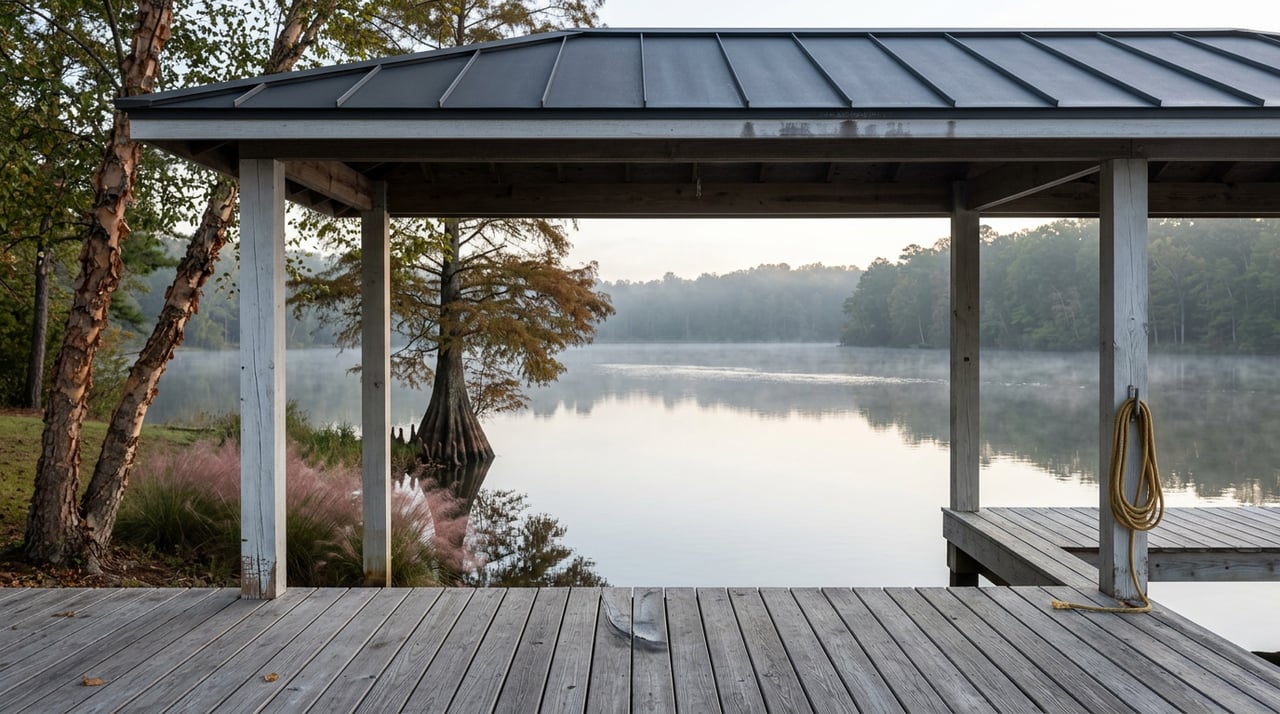
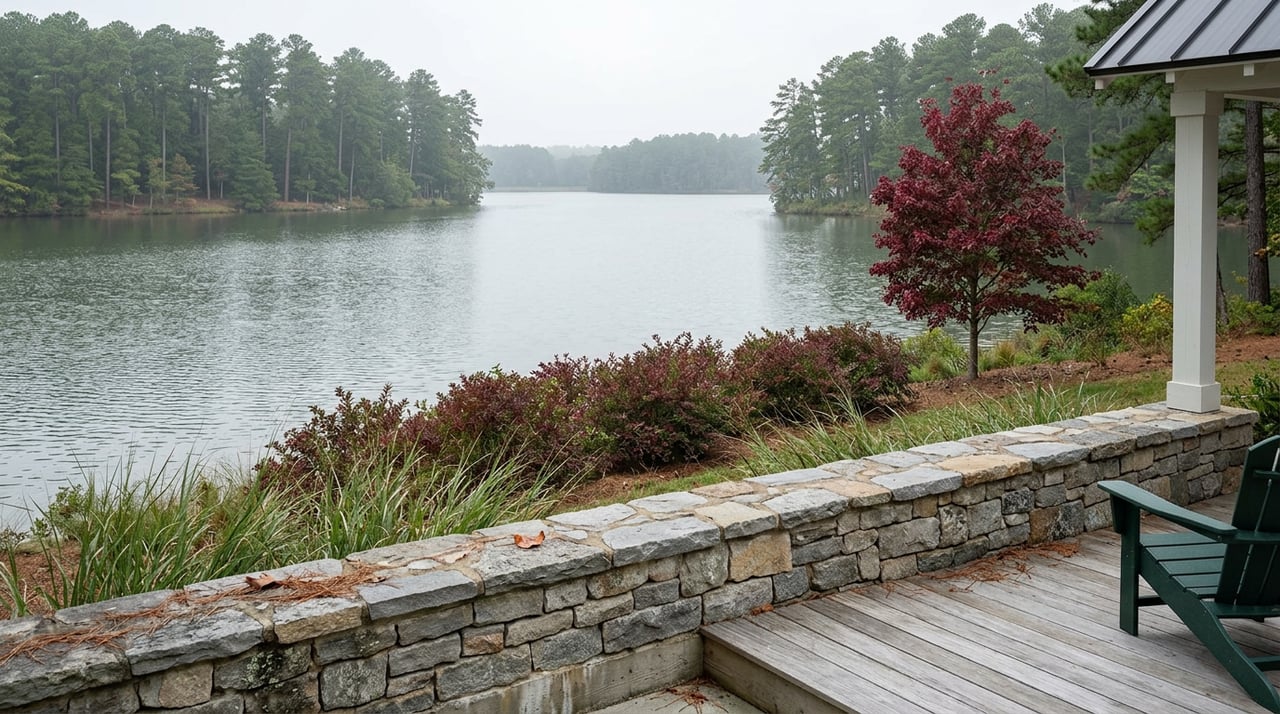
Listing photos are usually taken in summer, when the water is high and every dock floats. A showing this November gives you the dry-year version of the same property. You can see whether the dock still sits on water, how close it is to the neighbors, and how much room the cove has left. For a buyer comparing lakefront homes, that may be the most useful thing a fall tour gives you.
Section 15.5 of the plan, titled "Dock Relocation/Access, Low Pool," lets floating docks "be moved to follow the receding shoreline as long as one third of the channel remains open for navigation and safety is not an issue." Permit holders can also move a dock sideways, but "not beyond or crossing any neighboring facilities and not within the boundaries of 'protected' or 'recreation' zoned shoreline."
The open-channel rule caps how far out a dock can go, neighboring docks cap how far it can slide, and protected or recreation zoning can close off nearby shoreline completely. A wide cove with few docks leaves plenty of room. In a tight cove with docks close together, the usable water shrinks as the lake falls, and that's the situation the Corps' "amicable solutions" line is about.
The plan also rules out the obvious workarounds. "Excavation, digging, leveling or changing the contour to access the lakebed without a permit is prohibited," and so is permanently installing a hoist to move a dock. When the water is low, the plan says you can generally reach your dock by temporary wooden means.
The plan also sets a standard for full pool. Every planned boat-mooring site must have six feet of water under the dock at its lakeside or slip end. For private floating docks, the center third of the cove or channel stays open, and "during periods of low water navigation channels will not be obstructed." Six feet at full pool gives a dock some margin. A drought fall shows you how much of it is left.
These are the numbers behind the rule, using the latest readings before publication:
| Reference point | Elevation, feet above sea level |
|---|---|
| Full summer pool | 1,071 |
| Winter target | 1,070 |
| Reading at 10:15 p.m., Oct. 31, 2026 | 1,062.78 |
| 2007 record low | 1,050.79 |
Lake Lanier's level tracker recorded 1,062.78 feet on the night of Oct. 31, 2026. That's 8.22 feet below full pool and 7.22 feet below the winter target. The National Weather Service's river and lake table showed 1,062.83 feet that morning, down 0.04 feet in 24 hours. The 2007 low comes from the Lake Lanier Association, which points to that year as an example of what happens when a long rainfall deficit goes on without enough recharge.
The drought isn't spread evenly around the lake. The U.S. Drought Monitor map released Oct. 29, with data as of Oct. 27, shows how much of each lakeshore county was in moderate drought or worse:
Many buyers assume the low water is the usual winter drawdown and will reverse in spring. The Lake Lanier Association's Fall 2026 Lake Level Update calls that idea a relic of the years before the ACF Water Control Manual took effect. In the Association's words, "it's Mother Nature who is really pulling the strings, not the Corps."
The September numbers show why. The Association reported that the Corps was releasing only the minimum needed for downstream water supply and the 750-cfs water-quality minimum at Peachtree Creek. Inflows that month had averaged 338 cubic feet per second against required releases of 1,230, a deficit of 892 cfs a day. The shortfall goes back further than one dry summer. From Aug. 1, 2024, through Aug. 31, 2026, Gainesville got about 92.2 inches of rain against a normal of roughly 111.4, a deficit of about 19.3 inches.
Under the manual, the Association explained, storage depends on conditions across the whole basin. Once drought operations are in effect, or under winter rules running from Dec. 1 through February, the Corps can store essentially all inflow above the 5,000-cfs minimum required at Jim Woodruff Dam near the Florida line. Storing water still depends on rain. For a buyer, that means the conditions you see on a November tour could last longer than one season.
Your agent, the seller and the Corps all have a role here. These are the things worth checking while the water is down:
The Corps runs the permits, and local dock businesses do the physical work of keeping docks afloat. Southeastern Dock Supply advertises a Dock Watch service where a Gainesville crew moves docks to the current water line and checks cables, winches and ramps every two weeks, all year. In 2025, Boat Dock Movers Lanier published winter-prep advice that covers inspecting floats, anchors and lifts, and scheduling inspections in early to mid fall. If a seller already pays for regular repositioning, ask for those service records. They show how the dock has done through the season.
The Corps also publishes a list of dock builders, revised May 1, 2025. It includes local companies such as Browns Bridge Boatdock Co., Lakeside Dock Services, Martin Docks Inc. and S&S Docks Maintenance and Repair, and it says plainly that the Corps doesn't recommend any contractor.
For permit questions, the Corps' Shoreline Management page lists a Shoreline Management Help Desk at 770-904-3262. The Permit Program page lists the office at 1050 Buford Dam Road, Buford, Georgia 30518, and gives (770) 945-9531 for appointments. If a buyer plans to replace a dock, the plan says the permit holder has to request an appointment with the area ranger to discuss size and location. The posted plan dates to 2004, so ask Lakeshore Management to confirm current procedures for your cove.
This post is general information, not legal or financial advice. Please confirm how the Corps rules apply to a specific property with the Corps and the right professionals before you make an offer.
Does a dock that's grounded this fall mean the lot has a bad dock site? Not on its own. The Corps' six-foot standard applies to mooring sites at full pool, and this fall the lake was more than eight feet below that on Oct. 31, 2026. A grounded dock tells you how that site behaves in a dry year. Whether it works for you depends on your boat and how you use the lake.
Can an owner move a dock out to deeper water during low pool? The plan allows floating docks to follow the receding shoreline as long as a third of the channel stays open and safety isn't an issue. Sideways moves can't go past neighboring docks or into protected or recreation zones.
Will the lake be back to full pool by spring? That depends on rain. The Lake Lanier Association's Fall 2026 update says how much water the Corps can store depends on basin-wide inflows under the Water Control Manual, not a fixed calendar.
If you're touring Lake Lanier lakefront this fall and want help reading a cove at low water, from where the dock sits to who to call at Lakeshore Management, Dani Burns has lived on the lake since 2006 and is glad to walk the shoreline with you. If you own on the lake and wonder how this season might affect your listing, start with a conversation about your home's value.
newsletter
There's a morning every October when North Georgia turns.
We believe exceptional homes deserve exceptional representation. From exclusive properties to seamless negotiations, we represent every client with the care, precision, and elevated service luxury real estate demands.