April 16, 2026
If boating is part of your lifestyle, not just a weekend hobby, the wrong lake home can create headaches fast. A beautiful house on Lake Lanier may still be the wrong fit if the dock setup, water depth, shoreline exposure, or marina access do not match how you actually use your boat. This guide will help you shop smarter by focusing on the details that matter most when you want a boat-friendly home on Lake Lanier. Let’s dive in.
Lake Lanier is a large and varied reservoir, with about 39,038 acres of water, an average depth of around 60 feet, and a maximum depth of about 160 feet near Buford Dam, according to the U.S. Army Corps of Engineers. It stretches roughly 44 miles up the Chattahoochee arm and 19 miles up the Chestatee arm, so the boating experience can change quite a bit depending on where you are on the lake.
That matters when you are buying a home. A property on one part of the lake may offer easy open-water access for cruising and watersports, while another may feel more sheltered and better suited for calm dockage or fishing. On Lake Lanier, “boat-friendly” is really about how the home and shoreline support your specific boating goals.
The Corps describes the lower lake as heavily developed and heavily used, the middle lake as a mix of channels, bays, and narrow coves, and the upper lake as more secluded with sparser development and narrower channels, based on its 2021 environmental assessment.
In practical terms, that means you should not treat Lake Lanier like one single boating market. The feel of the water, the amount of traffic, and the type of shoreline can change meaningfully from one basin to another. Your ideal location depends on whether you want quick runs, quieter water, easier entertaining, or more protection at the dock.
The lower lake tends to be wider, more open, and more active. If you picture longer boat rides, fast access to broad water, and a more energetic boating setting, this area may line up with your goals.
At the same time, more activity can mean more wake and more competition for space during busy times. If dock protection and a calmer shoreline matter most to you, it is smart to look closely at cove placement and exposure before making an offer.
The middle lake offers a balance that appeals to many buyers. You may find a mix of broader water access and more protected coves, which can work well if you want flexibility for cruising, entertaining, and routine docking.
This area can be especially useful for buyers who want a little of everything. The right home here may offer a calmer setting at the dock while still keeping open water within easy reach.
The upper lake is described by the Corps as more scenic and secluded, with narrower channels and lighter development. It can appeal to buyers who prioritize a quieter feel and less exposure to heavy traffic.
The Corps also notes that narrow channels and coves in the upper lake are less subject to wave erosion than the lower basin, based on the Lake Lanier Master Plan. For many buyers, that supports the idea that sheltered locations may offer calmer dockage and a slower pace on the water.
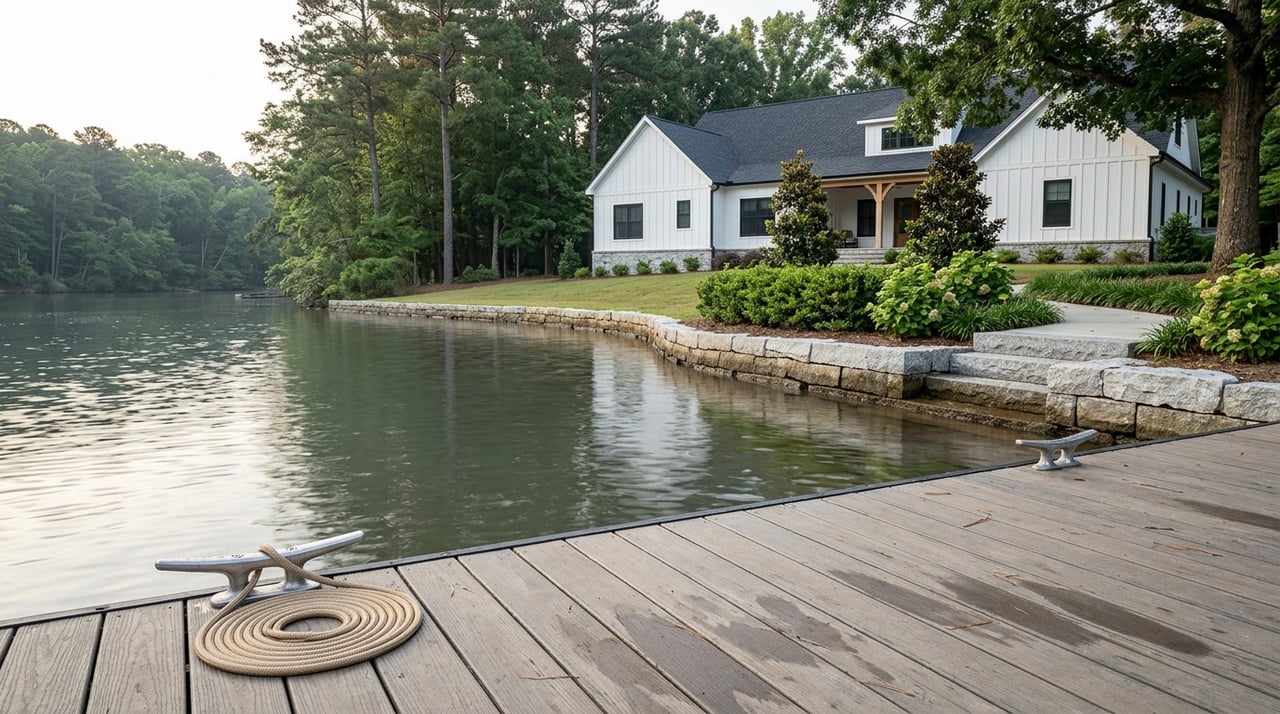
A boat-friendly home search should start with the shoreline, not just the house. Even a stunning property can fall short if the dock, water depth, or access setup does not support your boat and routine.
Here are the features worth checking early in the process.
Lake Lanier water levels fluctuate because the reservoir serves water supply and flood control purposes, according to the Corps lake level information. That means the most important question is not just how deep the lake is overall, but how usable the water is at the dock during normal conditions and during drawdown.
If you own a larger boat, this becomes even more important. You want to understand whether the dock remains practical when lake levels shift, and whether shallow spots, stumps, logs, or rock could affect navigation near the property.
Some buyers want direct access to wider water for watersports and longer cruises. Others want a more protected cove where docking feels easier and boat wakes are less disruptive.
On Lake Lanier, both setups can work well, but they serve different priorities. The best choice depends on how you boat most often, not just what looks appealing in listing photos.
On Lake Lanier, private shoreline facilities are regulated by the Corps. The shoreline permit program states that permits or licenses are only available in limited development areas, are generally issued for up to five years, are nontransferable, and do not convey real estate rights.
That means a dock should always be treated as a due diligence item. If a home has an existing dock, you need to know whether the permit is current and whether the shoreline zone qualifies for that use. A dock is never something you should assume simply “comes with” the property in a permanent way.
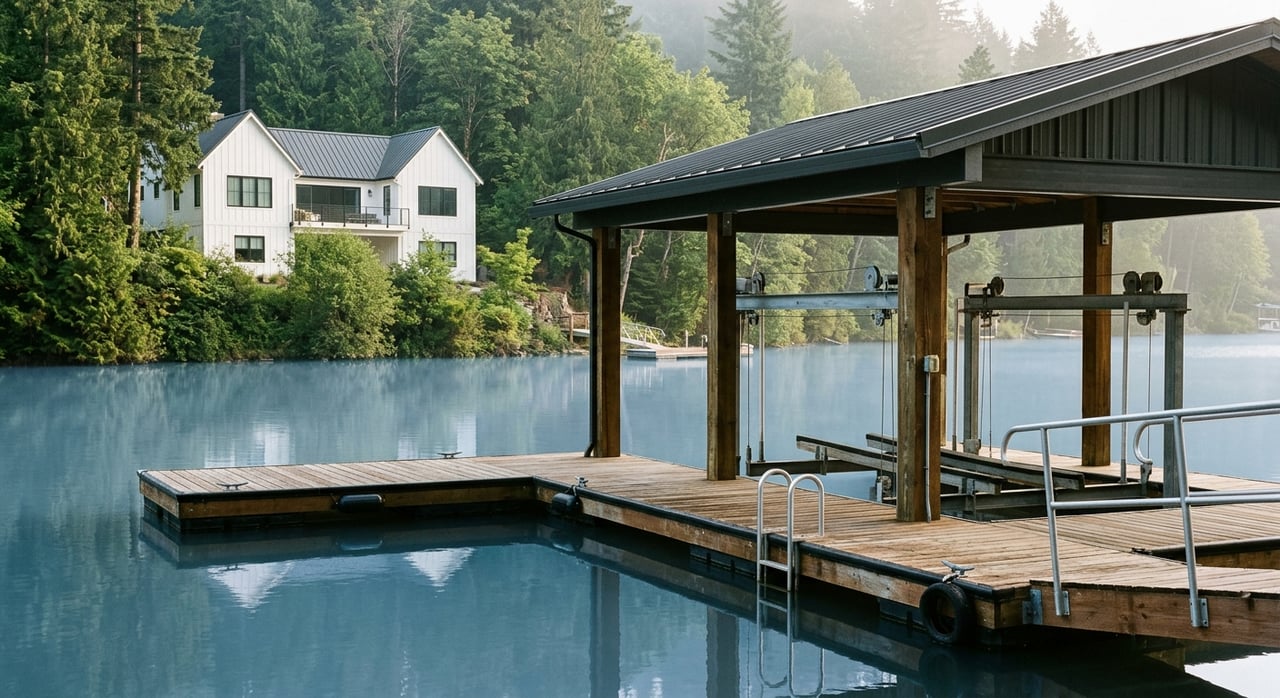
The dock itself should fit your boating lifestyle. A setup that works for one owner may not work for the next, especially if your boat size, storage needs, or boarding preferences are different.
You will want to look at how easy it is to tie up, load gear, and move people on and off the boat. If you entertain often or spend full days on the water, convenience at the dock can shape your experience just as much as the home interior.
Lake Lanier has 10 marinas and 76 boat ramps, and those amenities play a big role in day-to-day convenience. Marinas provide more than storage. The Corps notes they can offer fuel, repair services, snacks, and supplies.
That can make a real difference if you boat often or host guests. A home that is reasonably close to a marina or ramp may support a smoother lifestyle, especially during peak season or when you need service quickly.
The best boat-friendly property for you depends on how you actually use the lake. Here are a few practical ways to think about your search.
If your time on the water is mostly about fishing, a sheltered cove or a quieter middle- or upper-lake setting may be a better fit. Calmer dockage and lower wake exposure can help protect both your boat and your routine.
This lines up with the Corps findings on shoreline conditions, along with Georgia boating rules that require slow speeds near docks, marinas, anchored boats, and shoreline residences, as outlined by the Georgia Department of Natural Resources.
If you enjoy skiing, wakeboarding, or towing sports, you will likely want broader water and quick access to deeper, more open sections of the lake. The Corps describes Lake Lanier as well suited for waterskiing, sailing, pleasure boating, and fishing because of its width and water depth in the environmental assessment.
For many buyers, that points toward homes with easier access to wider sections of the lake. You still want to review dock exposure carefully, but open-water convenience may be a top priority.
If your ideal day includes casual cruising, sunset rides, or hosting friends and family, balance matters most. You may want a property that feels protected enough for comfortable docking but still offers practical access to fuel, supplies, and service.
That is where proximity to marinas can be especially useful. A well-located home can make entertaining much easier without sacrificing the relaxed lake setting you want.
Before you move forward on any Lake Lanier waterfront property, ask questions that go beyond square footage and finishes.
Start with these:
These questions can help you avoid surprises and focus on homes that fit both your lifestyle and the realities of Lake Lanier shoreline rules.
Shopping for a boat-friendly home on Lake Lanier is different from shopping for a typical waterfront property. With more than 10,000 privately owned boat docks and nearly 11 million annual visitors noted by the Corps in its environmental assessment, the lake is active, regulated, and highly specific from one shoreline section to the next.
That is why local knowledge matters. When you understand how basin location, dock rules, lake levels, and boating habits all connect, you can make a more confident choice and avoid buying a home that looks great on paper but does not work well on the water.
If you are planning a move on Lake Lanier and want help narrowing down homes that truly fit your boating lifestyle, connect with Dani Burns. With deep Lake Lanier experience and a client-first approach, Dani Burns can help you evaluate not just the house, but how the property lives day to day on the lake.
We believe exceptional homes deserve exceptional representation. From exclusive properties to seamless negotiations, we represent every client with the care, precision, and elevated service luxury real estate demands.