May 28, 2026
Dreaming about weekends on the water is easy. Buying the right second home on Lake Lanier takes more planning. If you want a place that fits your lifestyle, budget, and long-term goals, you need to look beyond the views and ask the right questions about docks, permits, financing, taxes, and county-specific details. Let’s dive in.
Lake Lanier is not a typical waterfront market. The lake is a U.S. Army Corps of Engineers reservoir with more than 690 miles of shoreline, and its shoreline stretches across Hall, Forsyth, Dawson, Gwinnett, and Lumpkin counties.
That matters because your experience as a second-home owner can depend on much more than the house itself. On Lake Lanier, shoreline rules, dock access, county jurisdiction, and recreation infrastructure can all shape how you use the property.
The lake also offers a wide range of settings. According to the U.S. Army Corps of Engineers, the lower lake is more densely developed, while many stretches of the upper lake remain less developed.
For you as a buyer, that creates an important lifestyle decision. Some buyers want easier access to marinas, recreation areas, and established lake activity, while others prefer a quieter setting with a more tucked-away feel.
Before you tour properties, get clear on how you plan to use the home. A second home on Lake Lanier can serve as a personal retreat, a gathering place for family and friends, or a long-term lifestyle purchase you expect to enjoy for years.
Your intended use affects nearly every part of the search. It can influence financing, insurance, furnishing costs, dock priorities, and even which part of the lake makes the most sense for you.
A few questions can help you narrow your focus:
When your answers are clear, the home search becomes much more strategic.
Financing a second home is not always the same as financing a primary residence. Fannie Mae guidance says a second home must be a one-unit dwelling that you occupy for some portion of the year, and it must be suitable for year-round occupancy.
The property also needs to remain under your exclusive control. It cannot be a timeshare, and it cannot be controlled by a management firm.
This is where buyers sometimes run into surprises. If you are also thinking about rental use, you should talk with your lender early about whether that plan changes the property’s occupancy classification.
Fannie Mae also notes that pricing can differ for loans secured by second homes. In practical terms, that means your interest rate or overall loan costs may not match what you would expect on a primary residence.
A short lender conversation up front can save you time later. Ask about:
These are core underwriting issues for second-home buyers, especially in a lake market where some homes may be used seasonally.
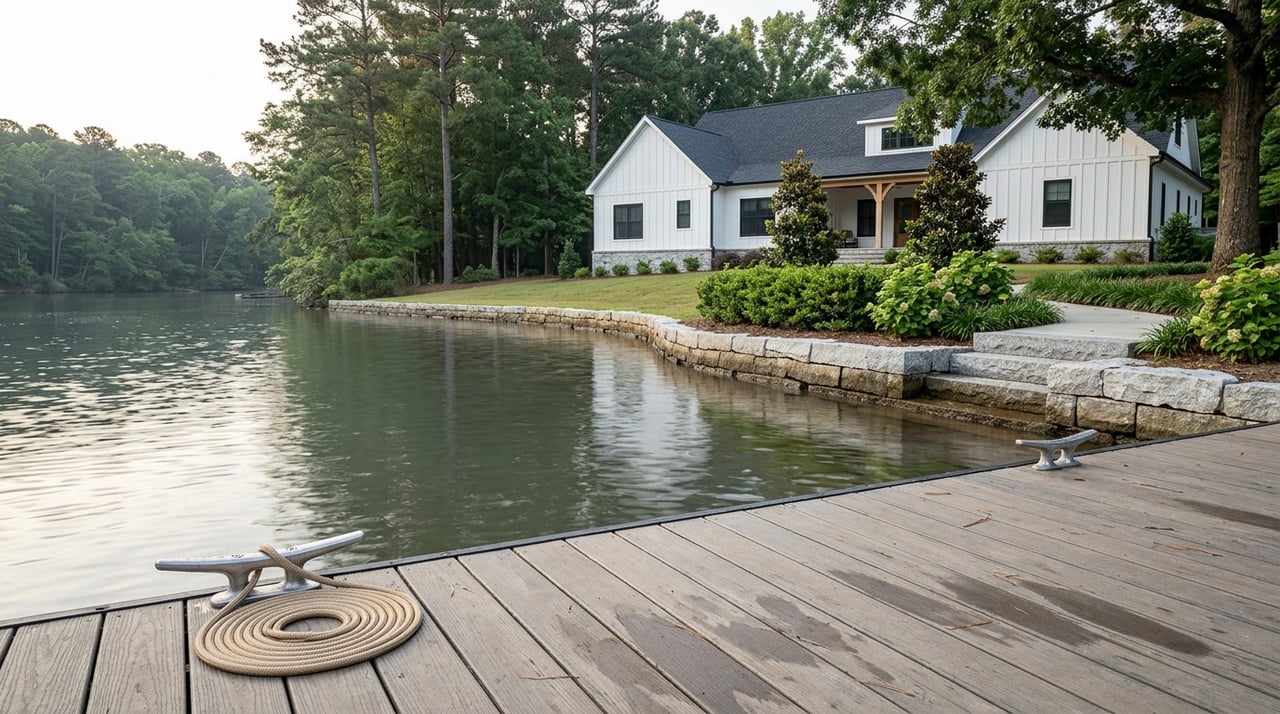
On Lake Lanier, a waterfront lot does not automatically mean you have private shoreline rights. The U.S. Army Corps of Engineers says the shoreline is open to the general public, and only owners adjacent to public lands zoned as limited development may apply for a Shoreline Use Permit or License.
That makes dock due diligence essential. If a dock is part of your dream, you need to confirm more than whether one exists today.
You also need to understand the shoreline classification tied to the property. The Corps uses four shoreline allocations: Limited Development Area, Prohibited, Protected, and Public Recreation.
Floating-facility eligibility depends on those classifications. That is why the shoreline designation shown on the plat or survey is such an important part of the review process.
When you evaluate a lakefront property, ask:
The Corps says shoreline-use permits and licenses for floating facilities are needed on certain public lands, are issued for a maximum of five years, are nontransferable, and do not convey real-estate rights.
That is a big point for second-home buyers. A dock can be a major lifestyle feature, but it is regulated separately from the deed to the house.
If you are planning around a boating season or a move-in deadline, permit timing matters too. The Corps says first-time applicants must meet on-site with a ranger, and a completed application usually takes about 6 to 8 weeks to process.
That does not mean every purchase becomes complicated. It does mean you should build permit review into your due diligence and closing timeline when dock access is a priority.
Lake Lanier spans five counties, and that can affect taxes, administration, and local logistics. Hall County contains the largest share of shoreline, followed by Forsyth, Dawson, Gwinnett, and Lumpkin.
For second-home buyers, this matters because property tax is assessed in the county where the land is located. Georgia Department of Revenue guidance says real property is generally assessed at 40% of fair market value, and the county tax assessor is the best source for valuation and appeal questions.
Taxpayers generally have 45 days from the assessment notice to appeal. Georgia also says property taxes are normally due December 20 in most counties, although some counties may use different due dates.
Another detail catches some buyers off guard. Georgia says there is no refund for part-year ownership if you owned the property on January 1.
If your primary residence is somewhere else, your Lake Lanier property will usually not qualify for a Georgia homestead exemption. Georgia says homestead exemptions apply to your legal residence, and you cannot already claim one for another property in Georgia or another state.
That makes it especially important to budget using the likely non-homestead tax structure. Your tax professional can help you understand how the property fits into your broader financial picture, but the county tax office remains the best source for the actual bill and assessment process.
Before you close, confirm:
This helps you avoid treating a second home like a primary residence from a tax-planning standpoint.
The monthly payment is only part of the picture. A second home on Lake Lanier often comes with additional ownership costs that deserve their own line items in your budget.
Lenders typically require homeowner’s insurance. It is also important to know that standard homeowner’s policies usually do not cover flood damage.
If the home is in a Special Flood Hazard Area in a participating community, federally regulated or supervised lenders must require flood insurance. That is why flood-zone review should be part of your early due diligence, not a last-minute surprise.
On a lake property, it is also smart to budget for ongoing dock and water-access costs where applicable. Permits, upkeep, maintenance, and lake-specific wear can all affect annual ownership expenses.
You may also need a separate setup budget for the home itself. Many second-home buyers spend more than expected on furniture, linens, kitchen items, and duplicate household essentials.
Your budget may include:
A realistic budget helps you enjoy the property instead of feeling surprised by it.
Even if this is a lifestyle purchase, it still helps to think ahead. A second home can be deeply personal, but resale appeal still matters.
On Lake Lanier, buyer demand may vary by location and use preferences. Based on Corps data about lake development patterns, lower-lake properties may appeal to buyers who want denser recreation access and more established shoreline development, while upper-lake properties may appeal to buyers who want a more secluded setting.
Neither is universally better. The key is choosing a property that matches your goals now while also making sense for the type of buyer who may want it later.
Features that often deserve extra attention include:
A smart purchase balances lifestyle fit with practical marketability.
A Lake Lanier second-home purchase often involves moving parts that do not show up in a standard home search. You may need clear answers about occupancy classification, flood insurance, dock permits, county tax handling, and long-term ownership costs.
That is why local guidance matters. Working with a professional who understands Lake Lanier’s shoreline rules, county differences, and waterfront buying process can help you ask better questions before you are under pressure.
If you are considering a second home on Lake Lanier, Dani Burns can help you evaluate properties with both lifestyle and practicality in mind, so you can buy with clarity and confidence.
We believe exceptional homes deserve exceptional representation. From exclusive properties to seamless negotiations, we represent every client with the care, precision, and elevated service luxury real estate demands.