May 21, 2026
The first showing for your Lake Lanier home usually happens on a screen. Before a buyer ever steps onto your dock or walks through your front door, they are deciding whether your property looks worth the trip. That is especially true on Lake Lanier, where buyers are not just comparing square footage, but also views, water access, and the lifestyle that comes with the address. In this guide, you’ll learn which listing photos and videos matter most, how to prepare your home, and what local rules can affect waterfront marketing. Let’s dive in.
Lake Sidney Lanier spans about 39,000 acres of water, includes more than 690 miles of shoreline, 76 recreational areas, 10 marinas, and more than 100 islands. That kind of geography changes how buyers shop. They are not only asking, “Do I like the house?” They are also asking, “How does this property connect me to the lake?”
That is why listing media carries so much weight here. Buyers want to see the path to the water, the dock setup, the outdoor living areas, and how much lake they can actually see from the home. On a market like Lake Lanier, strong visuals help answer those questions quickly.
National buyer data supports that importance. In the 2025 home-buyer report, buyers who used the internet rated photos as the most useful website feature at 83%, ahead of detailed property information at 79%, floor plans at 57%, virtual tours at 41%, and videos at 29%. Since many buyers begin online and 69% used a mobile or tablet device, your listing media needs to look clear and compelling on a small screen.
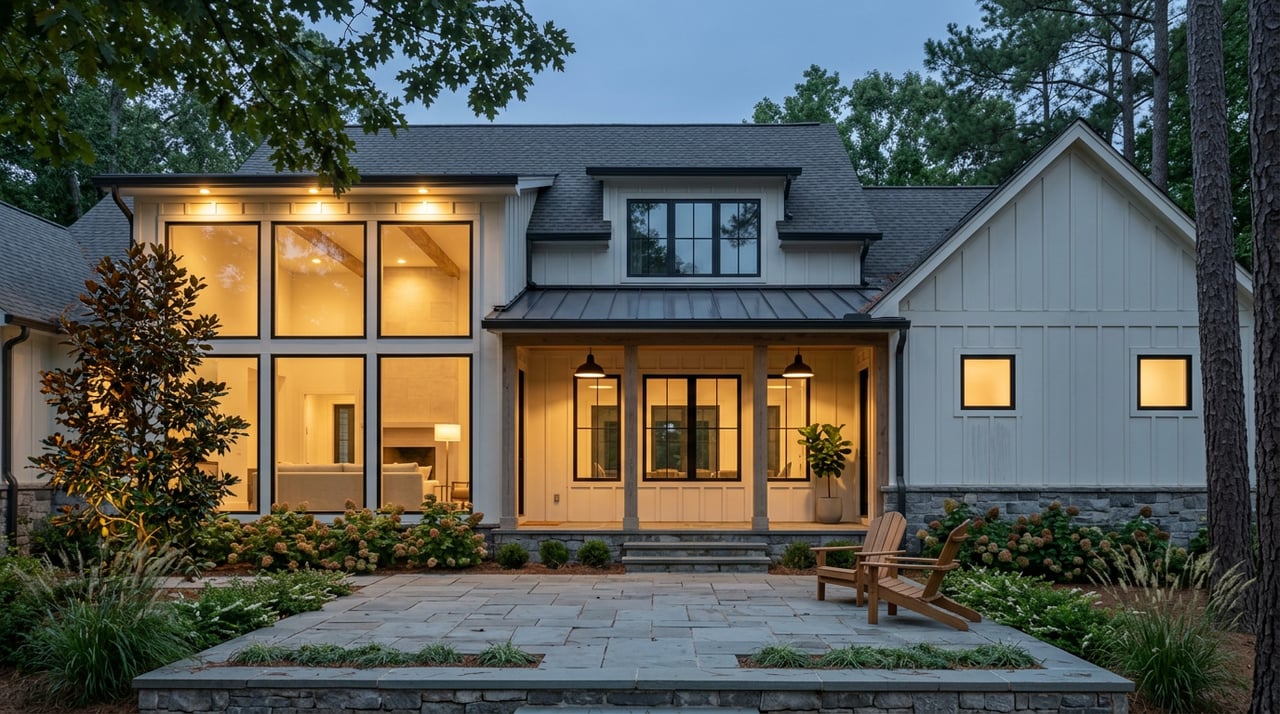
The best Lake Lanier listing photos do more than document rooms. They tell a clear story about how the home lives, how the lot sits, and how the property connects to the shoreline. For many waterfront buyers, that story starts outside.
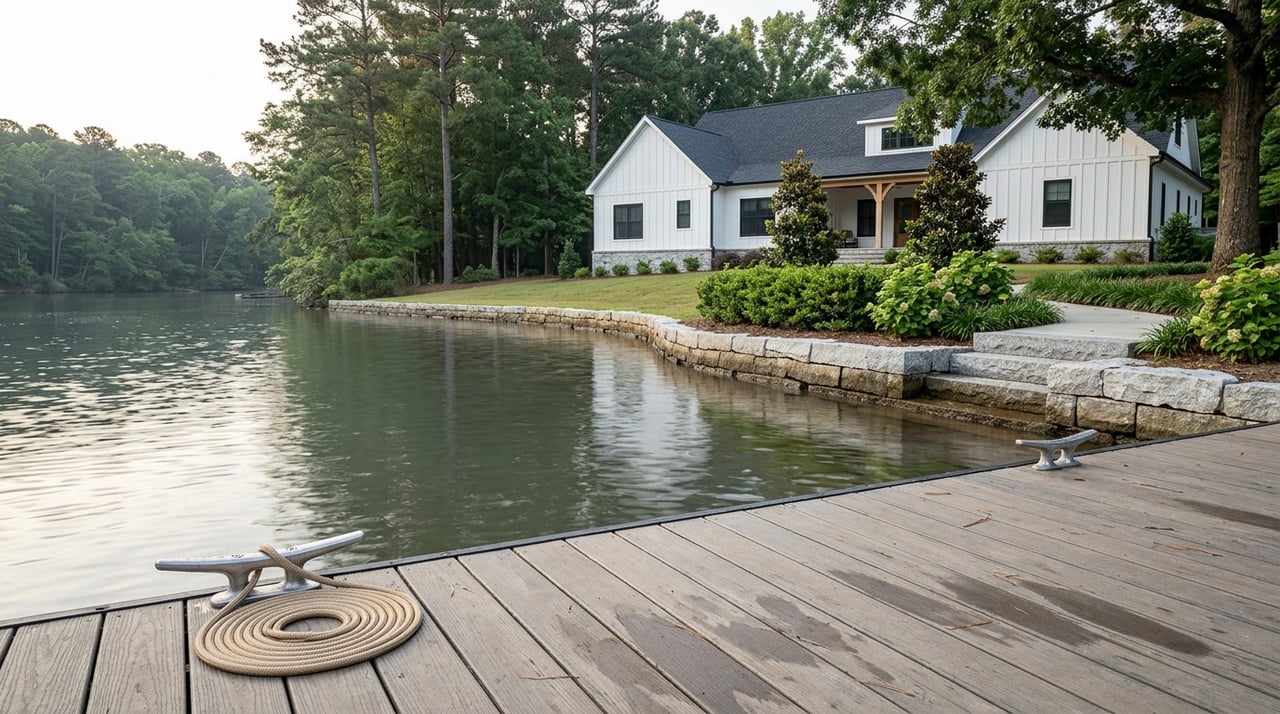
If your home has a dock, boat slip, lift, or clear shoreline access, those features should be photographed carefully and accurately. Buyers want to understand how they get from the house to the water and what that experience looks like in real life. A beautiful interior matters, but on Lake Lanier, access and orientation often shape buyer interest just as much.
It is also important to verify the paperwork before marketing these features. The U.S. Army Corps of Engineers manages shoreline use and issues certain permits or licenses for private facilities. Those permits are nontransferable and do not convey real estate rights, so documentation should be reviewed before the dock or related features are highlighted in the listing.
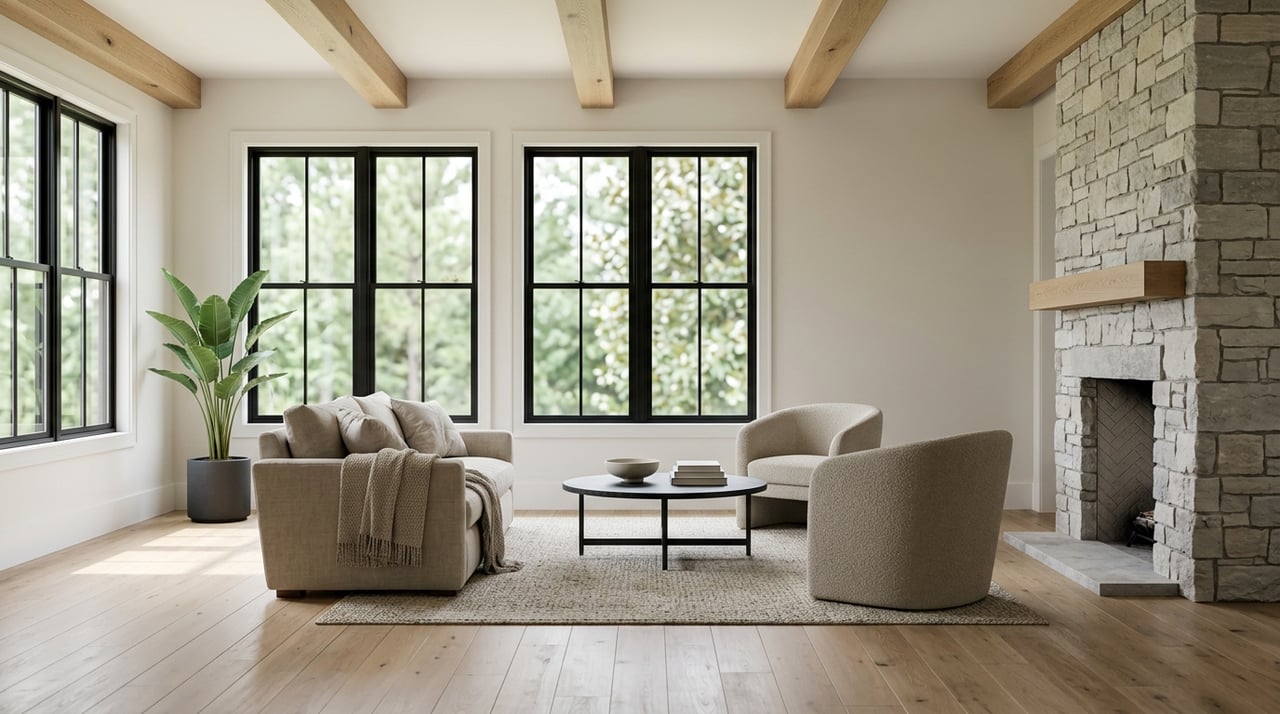
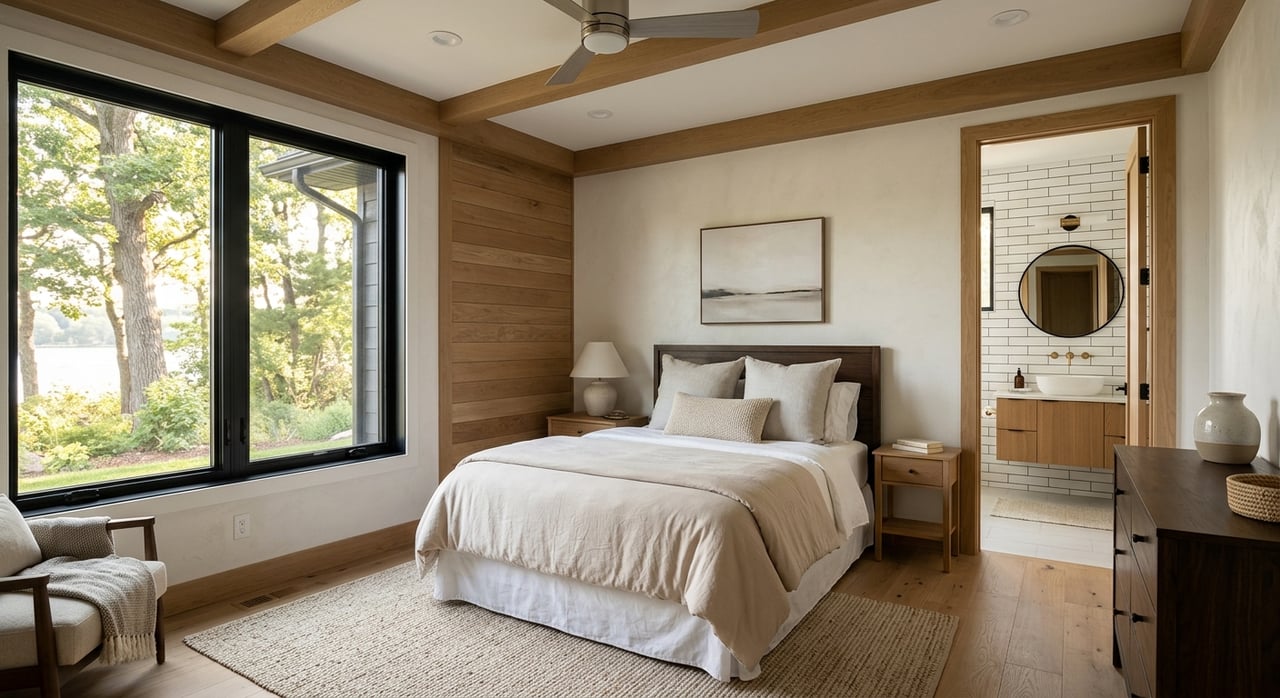
Lake views tend to carry the most impact when buyers can see them from the spaces they will use every day. That usually means the main living room, kitchen, primary bedroom, and any lake-facing sitting areas. Clean window lines and clear sightlines help buyers imagine the experience of living there.
This is where thoughtful composition matters. Photos should show what you actually see from inside the home, not just a zoomed-in water shot that disconnects the view from the room. Honest presentation builds trust and helps attract the right buyers.
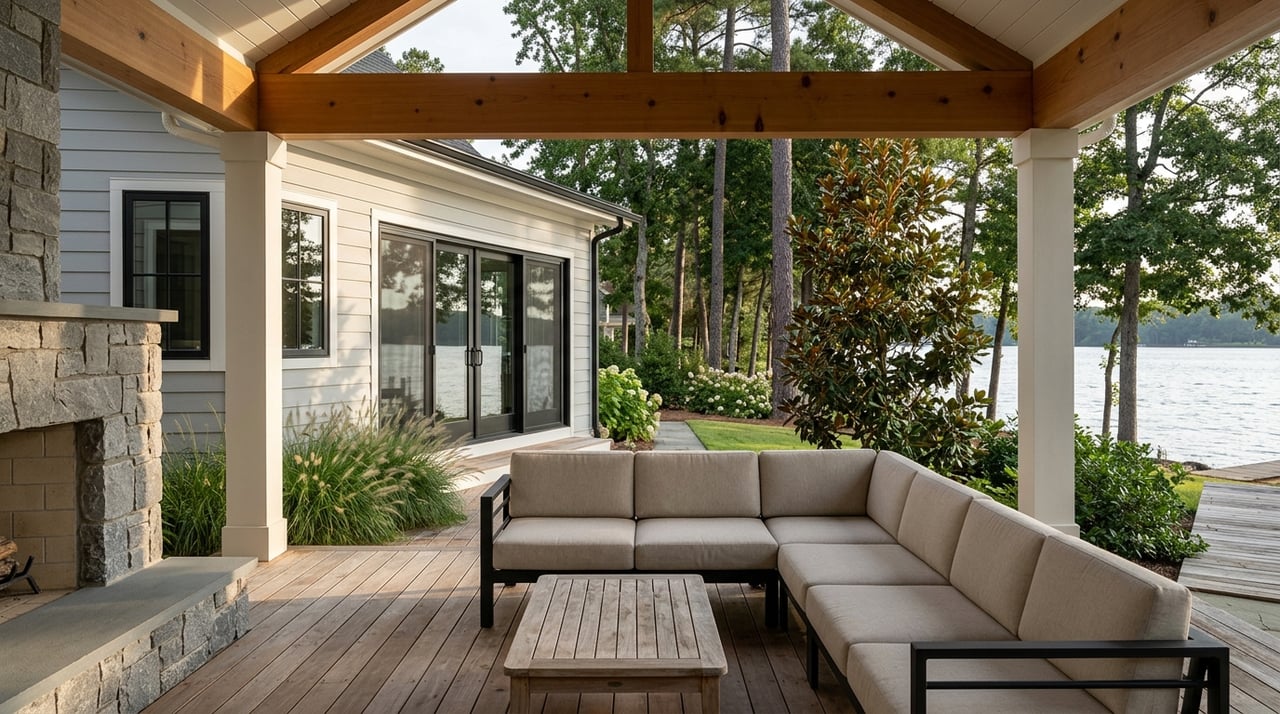
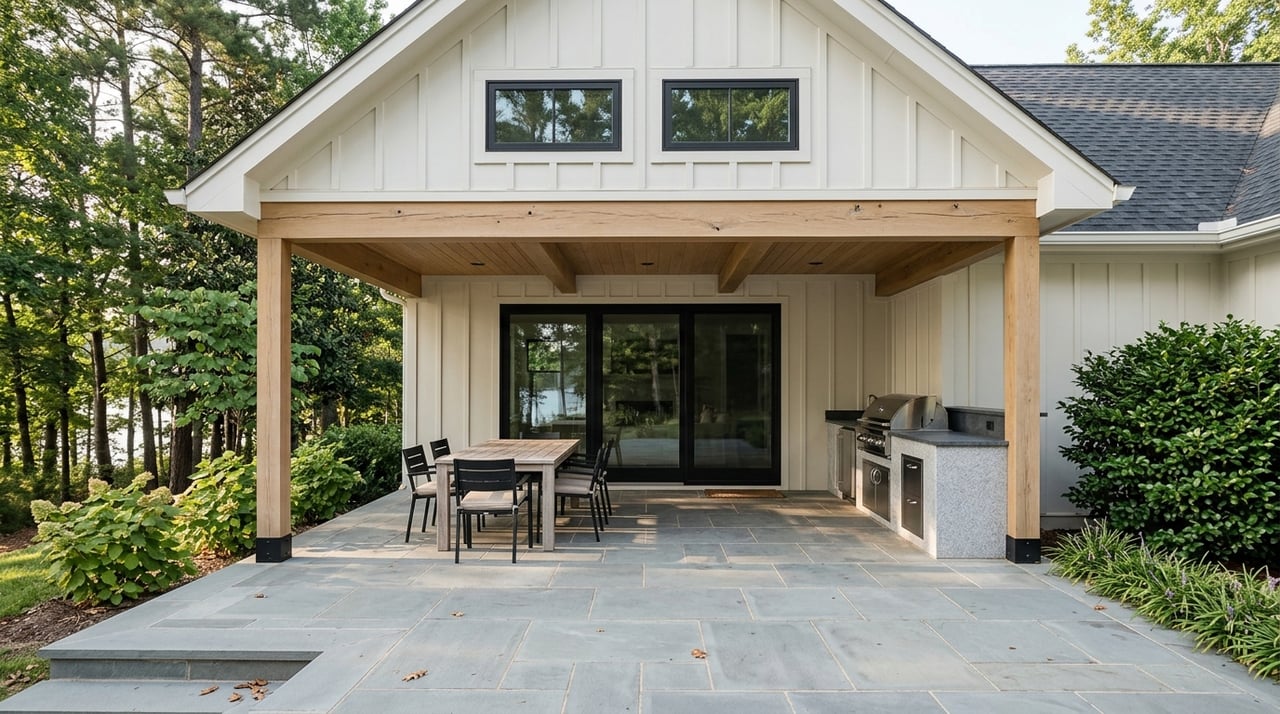
Decks, screened porches, patios, pools, and fire pit areas deserve focused attention in a Lake Lanier listing. These spaces help buyers picture how they will spend time at the property when they are not out on the water. If the outdoor areas connect visually to the shoreline or dock, that relationship should be easy to understand in the photo set.
For many luxury and second-home buyers, these spaces are not extras. They are part of the core value of the property. Well-planned photography should make that clear right away.
Aerial photography can be especially helpful on Lake Lanier because the shoreline is long, irregular, and often hard to understand from ground level. Overhead views can show lot position, shoreline shape, dock location, and whether the property sits in a cove or faces more open water. In many cases, an aerial image explains the setting faster than a dozen standard exterior shots.
That does not mean every listing needs heavy drone coverage. It means aerials should be used strategically when they help a buyer understand the property better. On a waterfront listing, clarity is always the goal.
Photos are still the top online tool for buyers, but video plays an important supporting role. A concise walkthrough video can help buyers understand flow, scale, and how indoor and outdoor spaces connect. For a Lake Lanier home, that can be especially useful when the lake-facing side of the home is a major selling feature.
Video works best when it supports strong photography rather than replacing it. Think of still photos as the attention-grabber and video as the deeper look. When both are done well, buyers can picture the home more fully before they ever request a showing.
A short, polished video can also help showcase movement through the home, transitions to decks or porches, and the experience of approaching the dock. That kind of storytelling fits the Lake Lanier market well because buyers are evaluating a property as both a residence and a lifestyle setting.
Floor plans are often overlooked, but buyers still find them useful. In the 2025 buyer report, 57% rated floor plans as a helpful website feature. For a lake property, that can be especially important.
A floor plan helps buyers understand how the home is laid out in relation to the views, outdoor entertaining spaces, and path to the water. If the home has multiple levels, guest areas, or a layout built for hosting, a floor plan can make those strengths easier to understand online.
Great listing media starts before the photographer arrives. The cleaner and more intentional your home looks, the better the final images will perform. That is true for any listing, but it matters even more when your home’s views and outdoor features are a major part of the appeal.
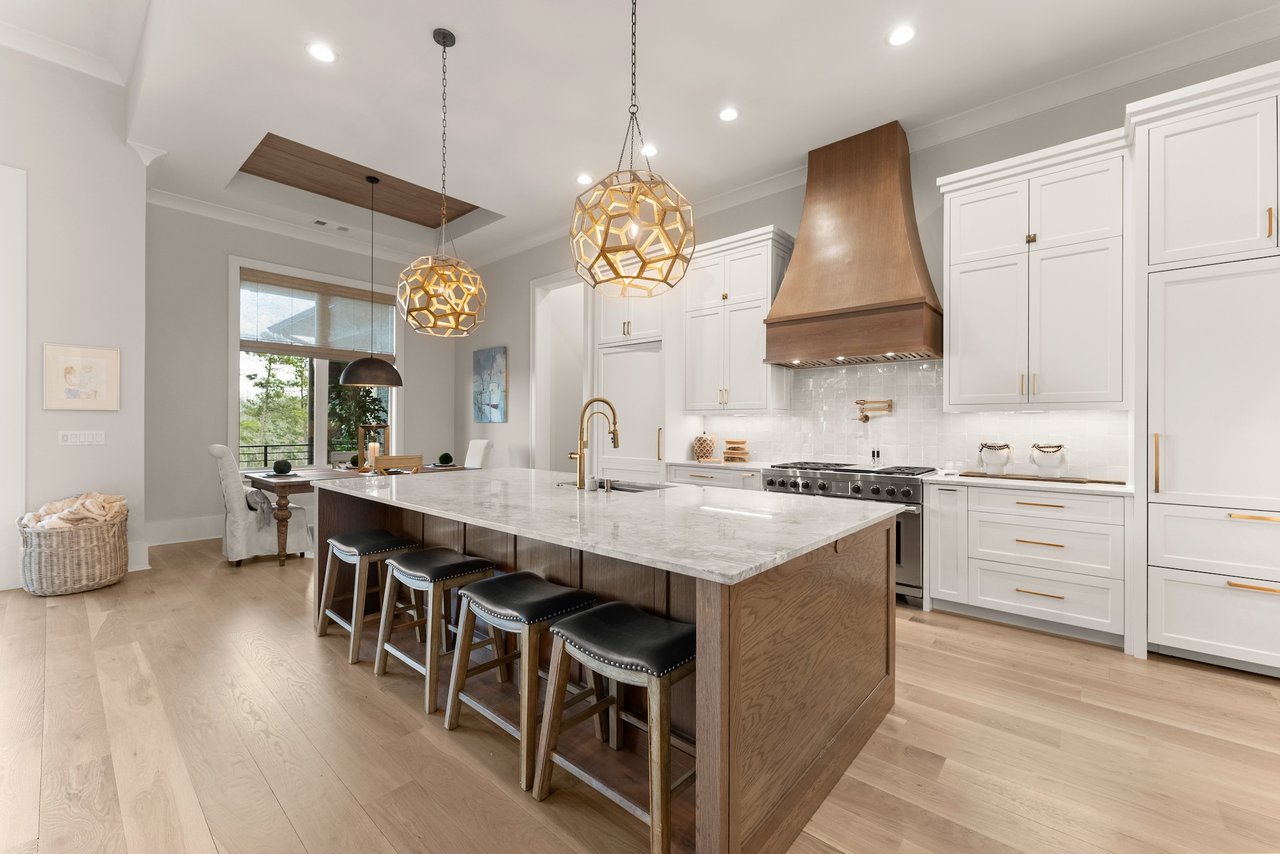
Photography guidance recommends deep cleaning, decluttering, depersonalizing, opening blinds, staging each room, and removing visual distractions such as cords, pets, fingerprints, and excess countertop items. These details may sound small, but they stand out quickly in professional photos.
For Lake Lanier homes, window glass deserves special attention. If the view is part of the value, the windows need to look spotless so buyers can focus on the water, not streaks or glare. In some cases, removing window screens can also improve natural light and help the view read more clearly.
According to the 2025 staging report, the living room, primary bedroom, and kitchen are the most important rooms to stage. Those are also the rooms where Lake Lanier sellers often have the best opportunity to connect interior comfort with lake views. A clean, calm presentation helps buyers picture themselves there.
Keep furniture placement simple and avoid blocking windows. If a room faces the water, the layout should support that feature instead of competing with it. Small changes in styling can make a major difference in how the listing feels online.
On a waterfront home, camera prep should extend all the way to the shoreline. That means tidying the path to the water, clearing loose items from the dock area, and making sure outdoor spaces look intentional and cared for. Buyers notice when the exterior story feels incomplete.
You also want to think about timing. Interior photos are usually best when the home is brightest, and exterior shots should be scheduled when the sun minimizes harsh shadows. On Lake Lanier, a calm-water day and a representative water level can also help the property show at its best.
Drone footage can be a major asset for waterfront marketing, but it has to be planned correctly. Commercial drone work for real estate falls under FAA Part 107. That includes requirements such as keeping the drone within sight, avoiding careless or reckless operation, flying below 400 feet in most cases, registering each drone, and using a remote pilot with the required certificate.
On Lake Lanier, there is another layer to consider. The U.S. Army Corps of Engineers states that commercial activities on its Civil Works projects require permission, and Lake Lanier guidance specifically lists filming projects and drone use as commercial special uses. The commercial filming application says it must be submitted at least 60 days in advance, and a drone application must be attached if a drone will be used.
For sellers, the practical takeaway is simple. If your marketing plan may include drone footage around the shoreline, dock, riprap, or other Corps-managed areas, plan early. Waiting until the home is almost ready to list can create avoidable delays.
The goal of listing media is to attract buyers with an accurate, polished presentation. That means avoiding shortcuts that create confusion or disappointment later. Over-editing, clutter, distorted perspectives, and images that misrepresent the home can all work against you.
Buyers respond best when the listing feels clean, honest, and easy to understand. Reflections, messy surfaces, awkward cropping, and photos of unfinished or overly tight spaces can weaken the overall impression. Strong marketing is not about making a property look different than it is. It is about presenting it at its best, clearly and truthfully.
For most Lake Lanier homes, the strongest marketing package includes polished still photography, a concise walkthrough video, selective aerials, and careful prep of the dock and outdoor living areas. That combination helps buyers understand both the home and the waterfront experience. It also gives them the information they need to decide if the property is worth a closer look.
When your listing media is done well, you create momentum before the first showing ever happens. In a market where setting, shoreline, and lifestyle all matter, that first impression can shape the entire sale.
If you’re getting ready to sell a Lake Lanier home, thoughtful visual marketing can make a real difference. For a tailored strategy that reflects your property, your goals, and the way lake buyers actually shop, connect with Dani Burns.


We believe exceptional homes deserve exceptional representation. From exclusive properties to seamless negotiations, we represent every client with the care, precision, and elevated service luxury real estate demands.