March 12, 2026
You bought a place on Lake Lanier to live outside as much as in, so your outdoor spaces should feel effortless, beautiful, and built for lake life. Whether you’re dreaming about a sunset dock lounge, a stone patio for long dinners, or a chef’s grill station, the smartest plans start with the lake’s rules and the right materials for Georgia’s climate. In this guide, you’ll get permit‑savvy tips, low‑maintenance ideas, and design moves that protect your shoreline and elevate daily living. Let’s dive in.
Before you sketch that new dock deck or run a gas line to your grill, get familiar with Lake Sidney Lanier’s shoreline rules. The U.S. Army Corps of Engineers manages the lake’s public shoreline through the Shoreline Management Plan and issues Shoreline Use Permits for docks and many lakeside features. Start on the Corps’ Lake Lanier Shoreline Management page to understand guidelines and how rangers oversee compliance.
Key facts to know from the Corps’ permit brochure:
The Shoreline Management Plan also includes administrative updates that affect dock design. Private floating facilities are generally open‑sided with common size limits up to 32' × 32', and the smallest permitted dock is often 18' × 24' with a 10' × 20' slip. Platform or T‑docks are not permitted for new private use. Mooring buoys are not allowed on Lake Lanier. Roof decks may be approved in some cases, but the Corps cautions about structural integrity when roof decks are used as occupied spaces. Review the administrative changes before planning upgrades.
Finally, remember that clearing trees or understory on Corps property, planting non‑native ornamentals, or placing unpermitted items on Corps land is prohibited. Work with your ranger and follow the steps in the permit brochure to avoid fines or permit issues.
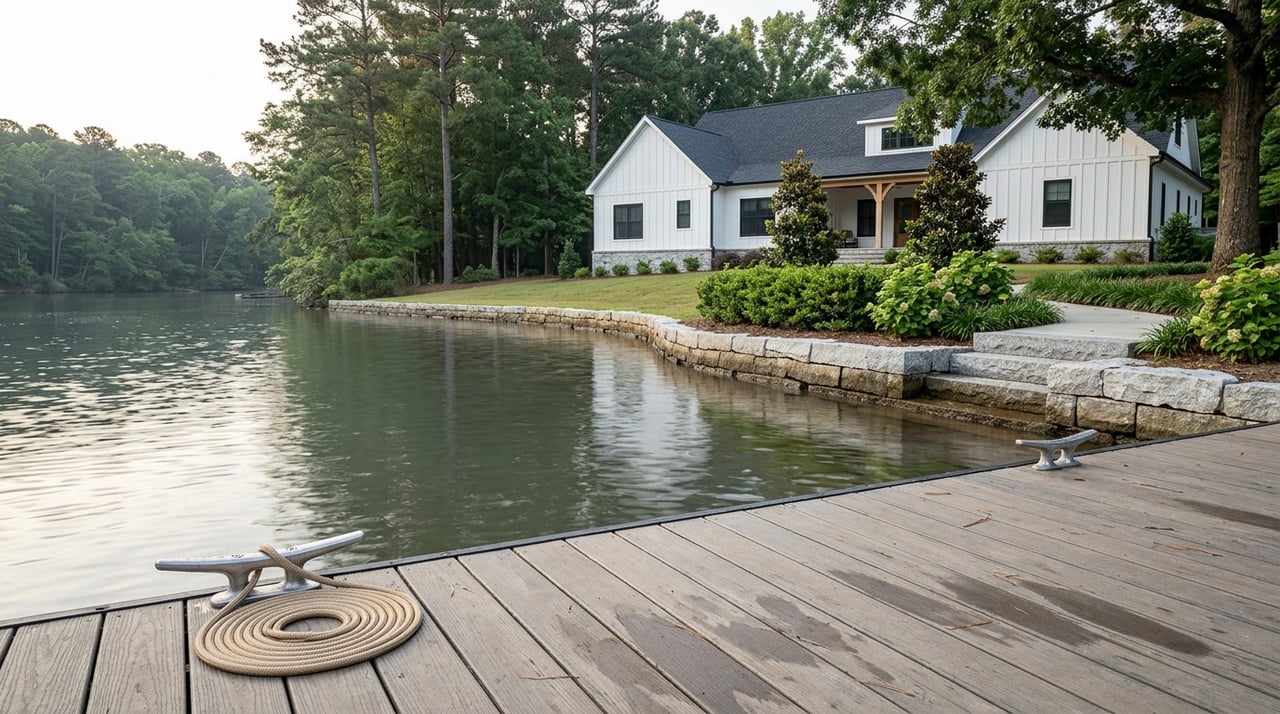
A great dock or lakefront deck should frame the view, handle sun and splash, and require minimal upkeep. Pair design inspiration with the Corps’ permit rules so you stay compliant.
Lakeside hardscapes should handle rain gracefully and protect the bank. Permeable surfaces like open‑joint pavers or stabilized gravel reduce runoff. Where you need a solid patio, stone, granite pavers, concrete with integral color, or porcelain pavers offer durable, slip‑resistant options. Grade surfaces to shed water away from the shoreline and include a planted buffer to capture runoff.
For access, gently curving paths and switchbacks are easier on the bank than steep stairs. The University of Georgia Extension explains how vegetated riparian buffers and well‑designed footpaths stabilize shorelines and improve water quality. See UGA’s practical guidance on shoreline vegetation and path design.
If your plan touches Corps land, get authorization first. Unauthorized items or clearing on Corps property can lead to fines or permit revocation, so bring your ranger into the design process early.
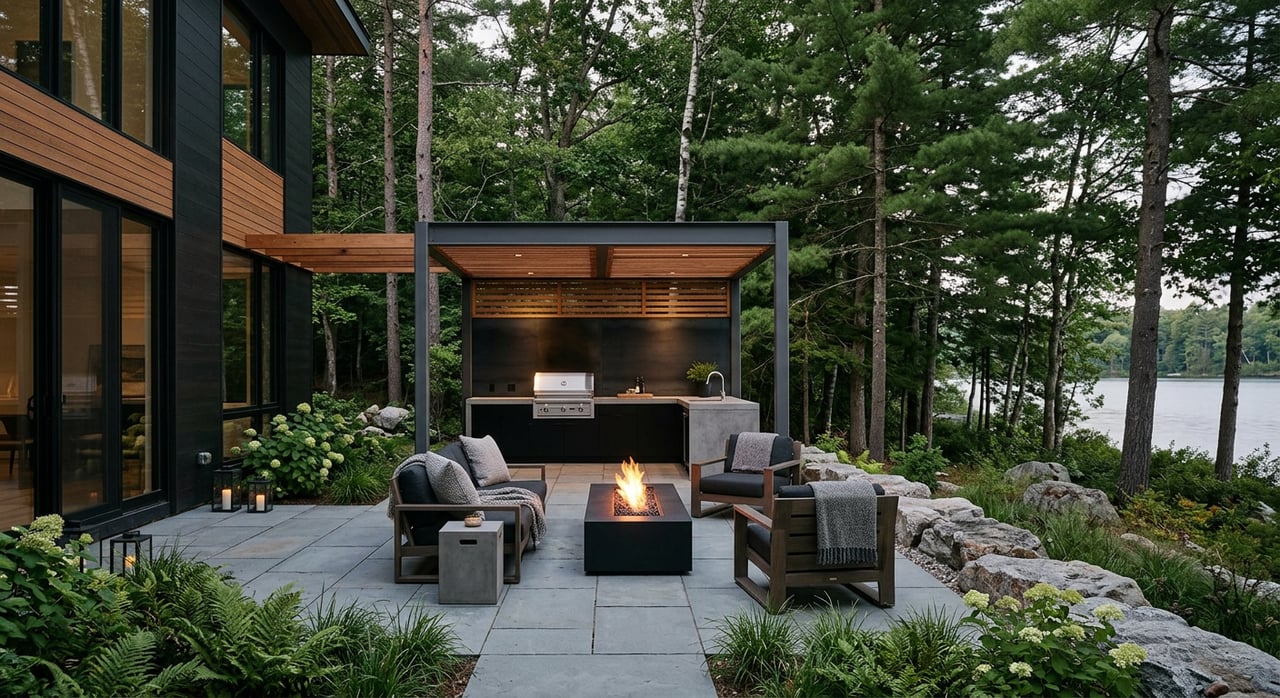
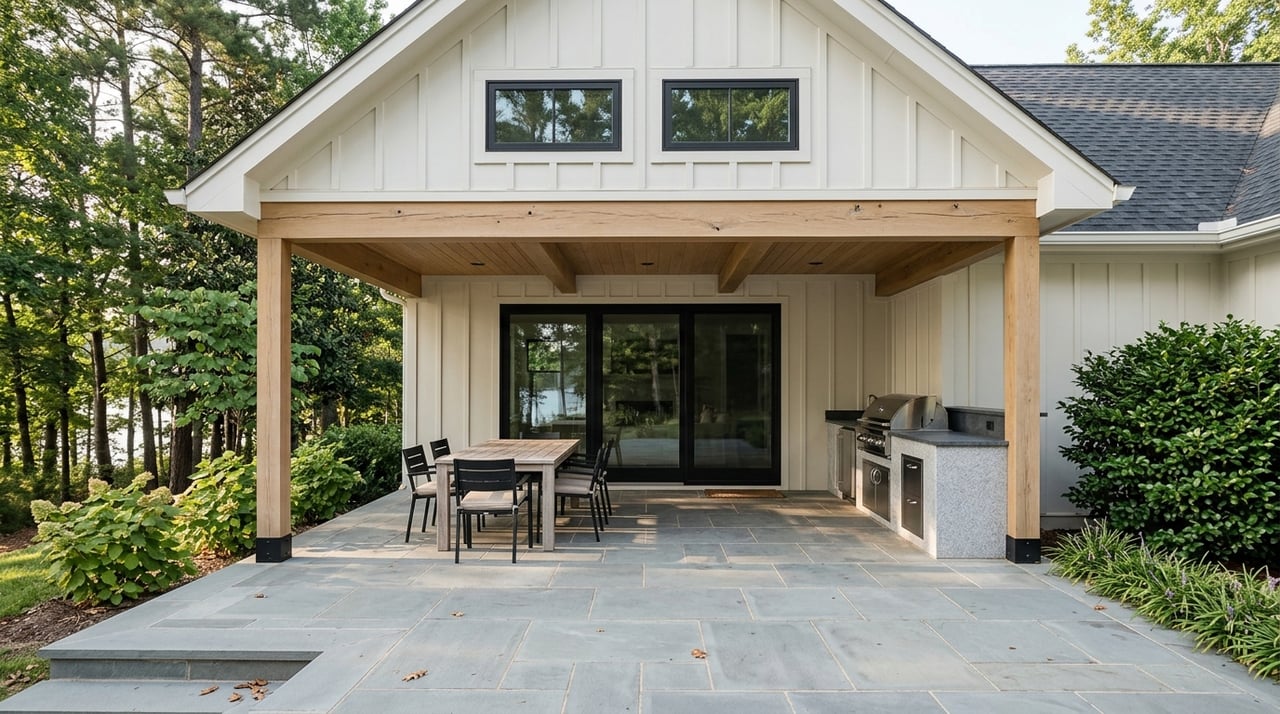
An outdoor kitchen or fire feature adds all‑season flexibility to your lake lifestyle. A few safety and permitting steps keep you on track.
North Georgia summers bring heat and humidity, so design shade and airflow into your plan. Pergolas, retractable awnings, and ceiling fans extend afternoon comfort. Upholstery in performance fabrics and light‑colored decking runs cooler and cleans quickly.
At night, aim for warm‑tone, shielded lighting that points downward. Dark‑sky‑friendly fixtures reduce glare on the water, protect wildlife, and make stargazing better. The International Dark‑Sky Association outlines responsible options in its outdoor lighting guidance. Put entertainment zones on dimmers, add timers or motion sensors along paths, and keep fixtures out of sightlines to preserve the view.
A healthy shoreline is both beautiful and protective. Living‑shoreline approaches use native plantings and sometimes low rock sills or coir logs to limit erosion, filter runoff, and support habitat. Federal and state agencies promote living shorelines as a first option where conditions allow. Learn the benefits in this EPA overview of living shorelines.
For Lake Lanier, UGA Extension recommends a diverse, vegetated buffer from grasses to shrubs and trees. Mulched or planted access paths with switchbacks often perform better than turf to the water’s edge. Avoid fertilizers and pesticides near the buffer and consult a shoreline professional when wave energy or wake exposure is high. Start with UGA’s North Georgia shoreline vegetation guide, then confirm with the Corps if your plan includes any shoreline protection measures. The Corps permits certain protection types, sometimes with no fee, but prior approval is required as outlined in the permit brochure.
Low‑maintenance choices pay you back with more time on the water. Here is what to expect by material:
Costs vary widely by material and complexity. Pressure‑treated wood is typically the lowest upfront cost. Composites, aluminum, and tropical hardwoods run higher in materials and installation. Use industry guides like BobVila.com’s material comparison to set expectations and then gather local quotes from licensed pros.
Ready to tailor these ideas to your property and the way you live? You can make smart, stylish upgrades that respect Lake Lanier’s rules, guard your shoreline, and welcome friends from coffee to sunset. If you’d like a seasoned local’s perspective on which improvements add value for buyers, reach out to Dani Burns to talk through your goals and timing.
We believe exceptional homes deserve exceptional representation. From exclusive properties to seamless negotiations, we represent every client with the care, precision, and elevated service luxury real estate demands.