February 5, 2026
You see “lake access” on a Lake Lanier listing and get excited. Then you tour the home and realize it might mean a view, a shared dock, a marina slip, or a drive to a public ramp. You are not alone if the language feels confusing. In this guide, you will learn what common terms really mean on Lake Lanier, how to verify them, and how each option affects your daily life and budget. Let’s dive in.
Lake Sidney Lanier is a reservoir managed by the U.S. Army Corps of Engineers. The Corps controls water levels, shoreline permits, and many recreation sites. That federal layer sits on top of state and local rules. Understanding that structure helps you know who to ask and what to verify.
Lake levels shift through the year for flood control, water supply, and recreation. Those changes can affect how high a dock sits, how easy it is to use, and whether shallow coves are navigable in a dry season. Plan for variation across years. A dock that is perfect in spring may sit differently in late summer.
The shoreline is full of coves and peninsulas. A house can be very close to the water yet still feel private. In other spots, a wide cove means you have a sweeping view but a longer walk or ride to a ramp or slip. Private docks, community docks, and commercial marinas sit side by side, so proximity and convenience vary a lot by cove.
Federal, state, and county rules can affect docks, seawalls, lifts, and erosion control. Many shoreline changes require a permit from the Corps. HOA covenants and county rules add another layer. Before you buy, you should know what is allowed, what exists today, and what must be maintained.
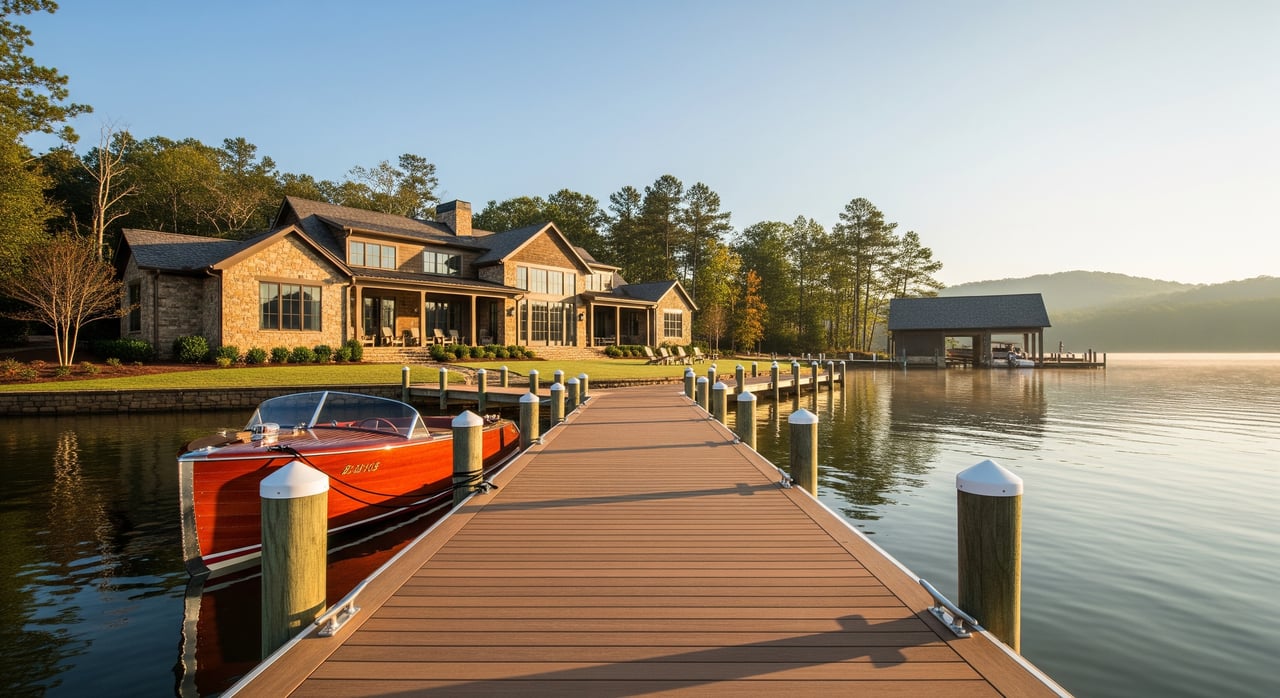
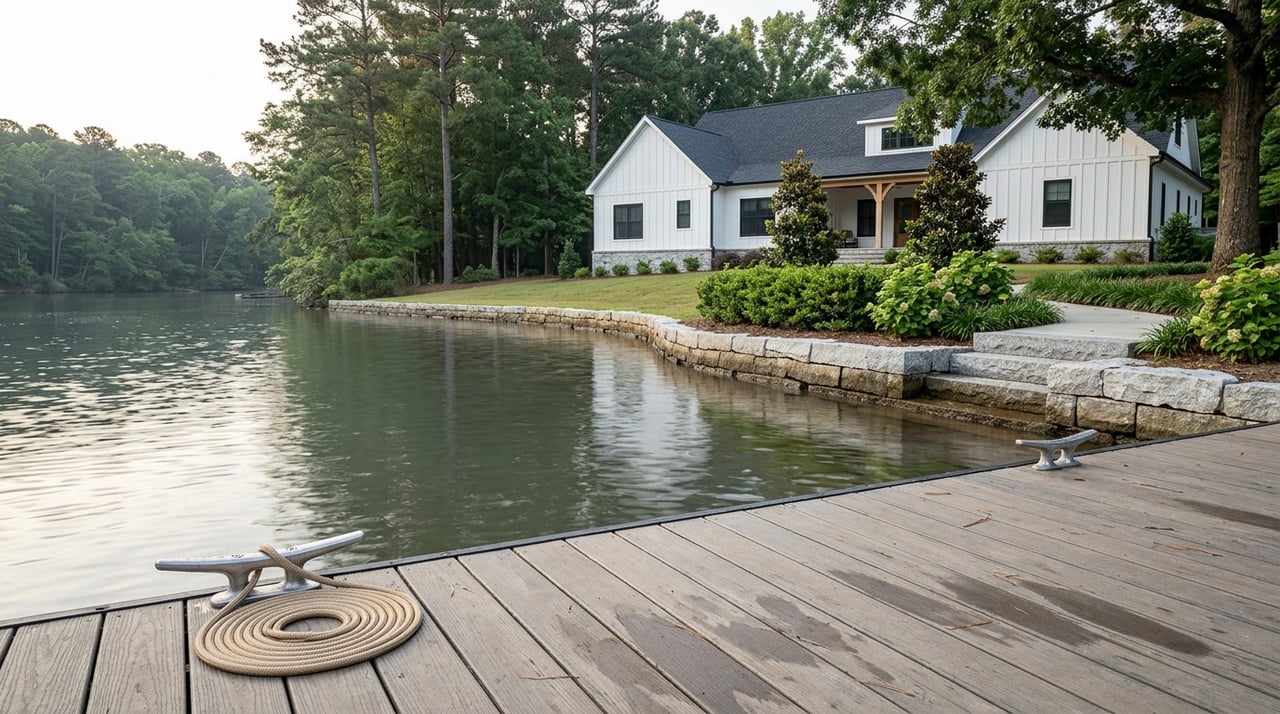
“Lakefront” usually means your lot physically touches the lake. It does not guarantee a private dock. You should confirm where the recorded boundary lies, whether the shoreline includes a Corps easement, and who owns the dock if one is present. Lifestyle perks include immediate access and privacy, with potential for a private dock if permitted.
“Lake view” means you can see the water, not that you can touch it. The view may be from a deck, a primary bedroom, or a seasonal opening through the trees. Check where the view is and whether future building could block it. If daily boating is your goal, a view alone may not meet your needs.
This phrasing means you are opposite the lake with a road in between. Access depends on rights-of-way and nearby public facilities. Check the distance to the nearest public ramp and the safety of walking routes. Consider parking and boat launch logistics if you plan to haul a trailer.
A community dock serves an HOA, a small group of lots, or a subdivision. Use is governed by recorded rules. Confirm who can use which slips, whether slips are assigned or first-come, rules on boat size and overnight mooring, and how fees and maintenance work. This option can offer reliable access without solo upkeep, but it comes with rules.
“Deeded” sounds straightforward, but on Lake Lanier it can mean different things. Sometimes it is a recorded easement tied to the lot. Other times it is an exclusive-use right that still depends on HOA or marina rules and U.S. Army Corps approvals. Review the deed and plat, verify transferability, and confirm any limits on use. Even a deeded slip can be subject to permits and community covenants.
Some homes include a slip at a nearby marina run by a third party. Those slips usually follow a separate agreement with fees, rules, and transfer policies. A slip may not automatically transfer with the home. Ask about waitlists, seasonal storage, and any consent needed from the marina operator.
This broad phrase signals general rights to use community facilities such as ramps, beaches, or docks. The details live in HOA covenants and rules. Request the recorded documents to see exactly what you get, how guests are handled, and what fees apply. “Privileges” without documents can be vague.
This means you are close to a public boat ramp, park, or day-use area. Public ramps are useful and can be very busy at peak times. Overnight mooring is typically not allowed. For occasional boaters, this can be a good solution without dock ownership.
These items tell you what you can use today, what it costs to maintain, and how your rights transfer at closing.
There is no one best choice. Your ideal fit depends on how you plan to use the lake, how often you boat, and how much you value simplicity, privacy, and control.
Start by mapping your lifestyle. How often will you use a boat, and what size is it? Do you prefer a private dock or are you comfortable with a shared system and rules? Are you willing to trailer to a public ramp on busy days? Clarifying these points helps you focus on listings that fit your daily routine and budget.
If you love early morning rides or spontaneous sunset cruises, a private dock near open water can be worth the premium. If you want less maintenance, a community slip may strike the right balance. If you prize views more than boating, a lake view home with a nearby ramp can hit the sweet spot.
Lake Lanier access is nuanced. Deeds, permits, HOA covenants, and water level patterns all shape your experience. You deserve a guide who can read the documents, ask the right questions, and spot red flags before you fall in love with a view.
As a long-time Lake Lanier resident and Realtor, Dani helps you interpret listing language, verify rights, and weigh trade-offs so you can move forward with confidence. Ready to find the right kind of access for the way you live? Connect with Dani Burns to plan your search.
We believe exceptional homes deserve exceptional representation. From exclusive properties to seamless negotiations, we represent every client with the care, precision, and elevated service luxury real estate demands.